Posted on Facebook on Aug. 5, 2026
Honestly? I was moved.
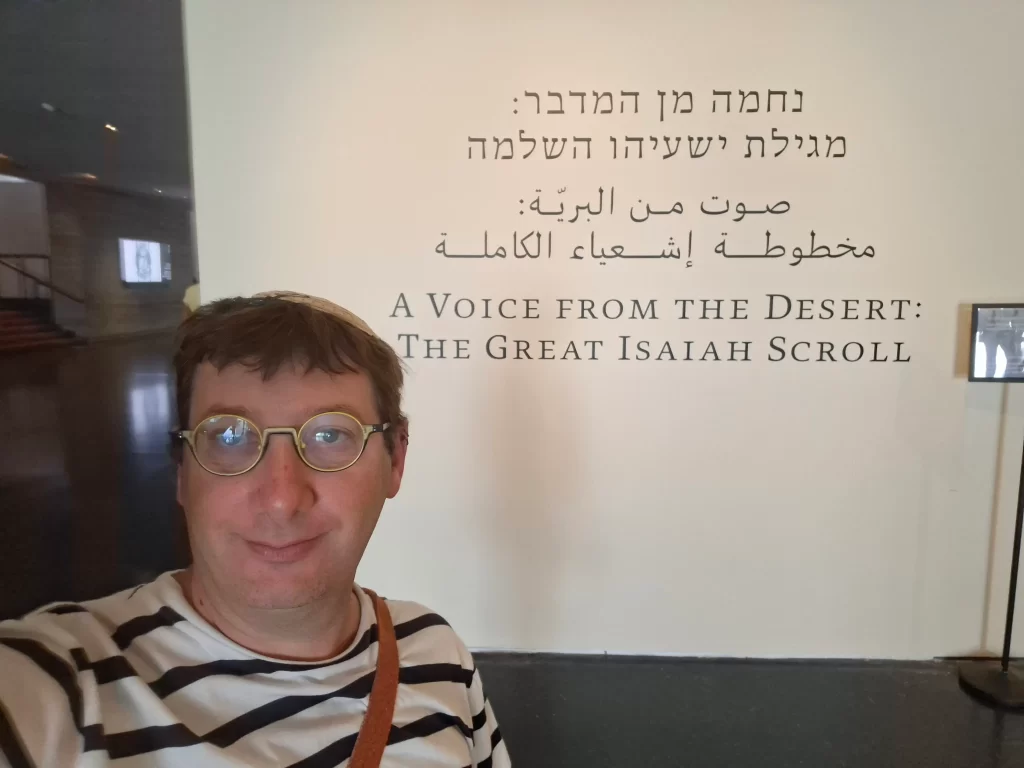
After so many years of studying, teaching, and connecting to the history of the Jewish people and the Land of Israel, walking into the “A Vvoice from the Desert” exhibition at the Israel Museum and seeing, with my own eyes, the original complete Isaiah Scroll from Qumran was an especially moving experience.
Yes, I was moved to see the original, a complete copy of the Book of Isaiah dating to the second century BCE.
Yes, I was moved to stand before the very prophecies of consolation that Jewish communities around the world are reading during these weeks between Tisha B’Av and Rosh Hashanah.
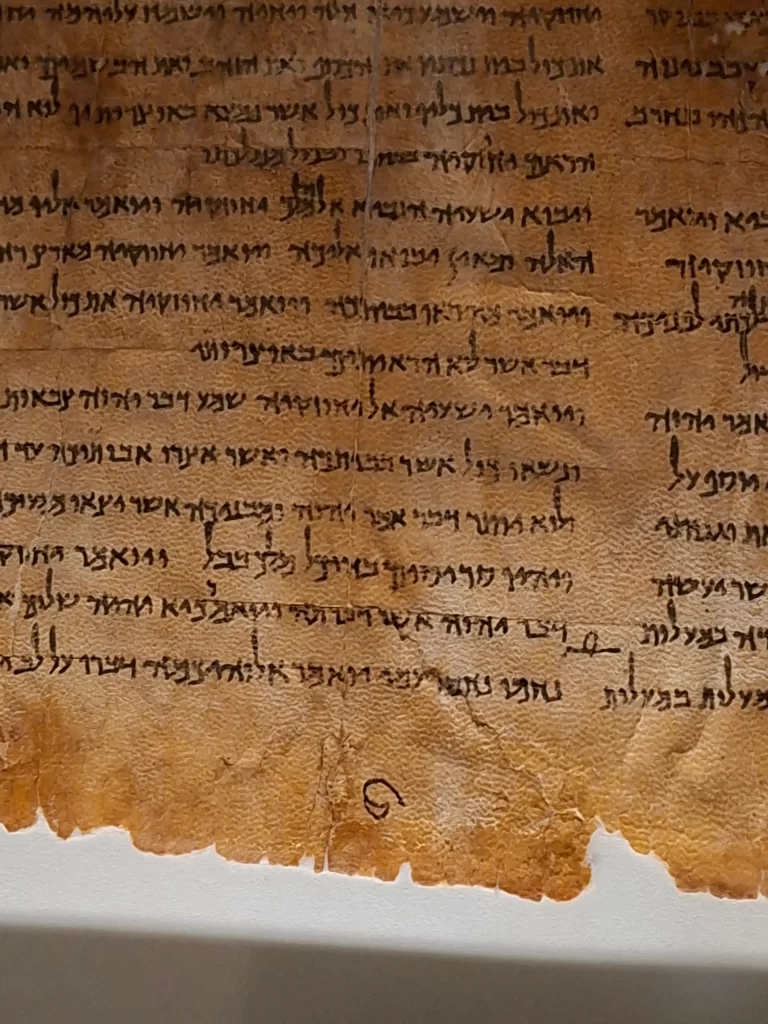
Yes, I was moved to see firsthand features that I have studied and explained countless times while standing in front of the replica displayed in the Shrine of the Book. For example, the absence of certain guttural letters, letters that had apparently fallen out of everyday pronunciation and were therefore words were written as they were spoken. It was remarkable to see how spoken language itself is reflected in the written text.
And then there were the simile- figures of speech, metaphors and expressions that have become cornerstones not only of Jewish culture but of human civilization itself:
“The ox knows its owner, and the donkey its master’s crib; but Israel does not know, My people do not understand.” (Isaiah 1:3)
“They shall beat their swords into plowshares and their spears into pruning hooks. Nation shall not lift up sword against nation, neither shall they learn war anymore.” (Isaiah 2:4)
“O House of Jacob, come, let us walk in the light of the Lord.” (Isaiah 2:5)
“The wolf shall dwell with the lamb, and the leopard shall lie down with the young goat.” (Isaiah 11:6)
“With joy you shall draw water from the wells of salvation.” (Isaiah 12:3)
“Let us eat and drink, for tomorrow we die.” (Isaiah 22:13)
“Comfort, comfort My people, says your God.” (Isaiah 40:1)
“I form light and create darkness; I make peace and create calamity.” (Isaiah 45:7)
“I will give them, in My house and within My walls, a memorial and a name better than sons and daughters.” (Isaiah 56:5)
“I will bring them to My holy mountain and make them joyful in My house of prayer… for My house shall be called a house of prayer for all peoples.” (Isaiah 56:7)
“Rejoice with Jerusalem and be glad with her, all who love her.” (Isaiah 66:10)
And there are so many more.
*The exhibition’s curators did a remarkable job of making these textual features accessible and meaningful to visitors.
But more than anything else, I was moved to realize, as a tour guide and educator, that this scroll, containing the complete text of the Book of Isaiah, and likely many of the other scrolls discovered at Qumran, was never simply an object on display or a means of preserving knowledge. It was a living scroll. A scroll that was actually used.
Yes, really. Someone was bothered enough by missing guttural letters to add them between the lines. Verses that had accidentally been omitted by the original scribe were inserted later because they mattered to later readers. Tears and cracks in the parchment were stitched with linen thread to prevent further damage, and weakened sections were reinforced with strips of leather attached to the back of the scroll.
Standing before the Isaiah Scroll, I realized I was looking at one tangible example, among many, of my own Jewish civilization: a culture that, for more than two thousand years, has continued to study, interpret, debate, expound, and rediscover new relevance in these ancient words, generation after generation.
A living book.
A living culture.
A living people in their land.
That moved me.